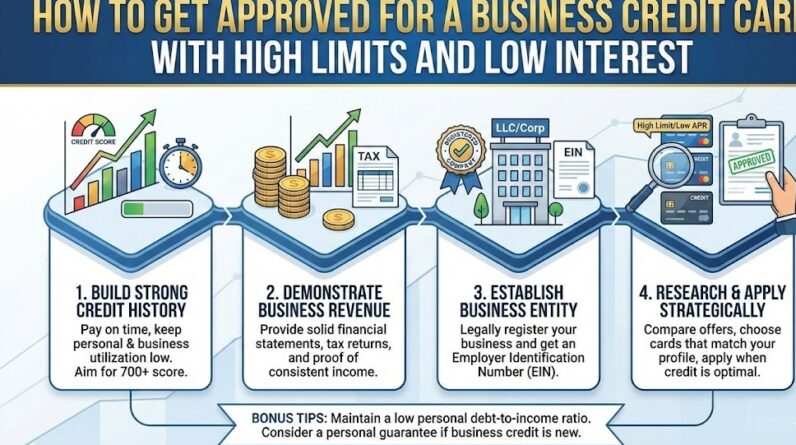


Securing the right capital is often the difference between a business that survives and one that thrives. In the United States, the lending landscape is vast, ranging from traditional bank loans to fast-moving online lenders. However, navigating the fine print regarding rates, repayment terms, and eligibility can feel like walking through a minefield.
Here is a breakdown of what you need to know to make the best financial decision for your company.
1. The Hierarchy of Lenders
Not all money costs the same. Generally, business loans fall into three main categories, each with its own risk and reward profile.
-
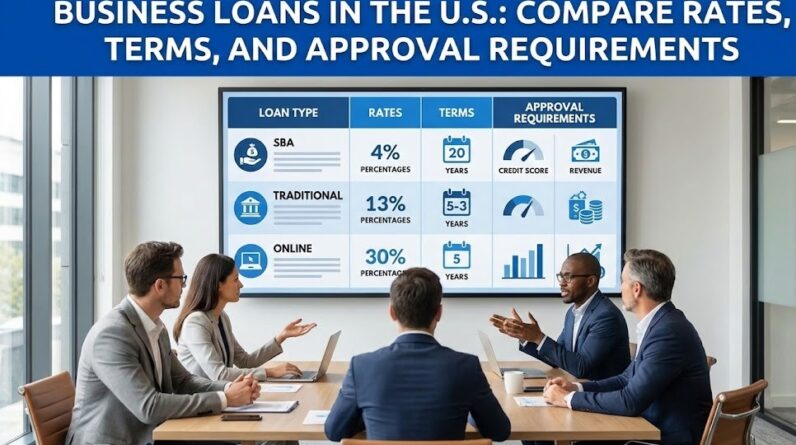
Traditional Banks: These offer the lowest rates but have the strictest approval standards. They prefer established businesses with collateral.
-
SBA Loans (Small Business Administration): Government-backed loans (like the 7(a) program) that reduce risk for lenders, allowing them to offer competitive rates and longer terms to small businesses that might not qualify for traditional bank financing.
-
Online & Alternative Lenders: These prioritize speed and convenience over low costs. If you need cash in 24 hours, this is where you go, but you will pay a premium for it.
2. Comparing Rates and Terms
Understanding the Annual Percentage Rate (APR) is crucial because it includes not just the interest rate, but also the fees associated with the loan.
-
SBA 7(a) Loans:
-
Rates: Typically Prime rate + 2.25% to 4.75%. Currently, this often lands between 10% and 13%.
-
Terms: Up to 10 years for working capital and 25 years for real estate.
-
Best For: Long-term growth, buying equipment, or refinancing debt.
-
-
Traditional Bank Term Loans:
-
Rates: Generally between 6% and 12%, depending heavily on the prime rate and your creditworthiness.
-
Terms: Usually 3 to 10 years.
-
Best For: Established businesses looking for the lowest cost of capital.
-
-
Online Term Loans & Lines of Credit:
-
Rates: These vary wildly, from 10% up to 40%+ APR.
-
Terms: Short-term, often ranging from 6 months to 3 years.
-
Best For: Bridging cash flow gaps, emergency inventory purchases, or businesses with less-than-perfect credit.
-
3. The Approval Gauntlet: What Lenders Want
Getting approved isn’t just about having a good idea; it’s about proving you can pay the money back.
-
Credit Score: For prime loans (SBA/Bank), you typically need a personal FICO score of 680 or higher. Online lenders may accept scores as low as 550, but the interest rates will reflect that risk.
-
Time in Business: The “magic number” is usually 2 years. Most traditional banks view anything less as a startup risk. Online lenders might accept 6 months to 1 year of history.
-
Revenue & Cash Flow: Lenders want to see consistent cash flow to support daily operations plus the new loan payment. You will likely need to show annual revenue of at least $100,000 to $250,000 for standard loans.
-
Documentation: Be prepared to provide business and personal tax returns (last 2-3 years), profit and loss statements, balance sheets, and a debt schedule.
Final Verdict
If you have the time and the credit score, SBA or traditional bank loans are strictly superior due to the savings on interest. However, if opportunity knocks and you need to move fast, online lenders serve a purpose—just be sure to have a clear plan to pay off that higher-interest debt quickly.